
How CO₂ Laser Machines Work: A Deep Dive into Laser Cutting Technology
CO₂ laser machines are among the most widely used laser cutting technologies today, offering precision, versatility, and efficiency for a variety of industries. From engraving intricate designs on acrylic to cutting metal with extreme accuracy, these machines play a crucial role in manufacturing, signage, and even hobbyist projects.
In this article, we’ll take a deep dive into how CO₂ laser machines work, their core components, and why they are an essential tool for businesses and creatives alike.
1. Understanding CO₂ Laser Technology
CO₂ laser machines operate using a gas-based laser beam generated from electrically stimulated carbon dioxide (CO₂) gas. The laser beam is invisible to the human eye, as it operates in the infrared spectrum at 10.6 micrometers (µm).
When this highly focused beam interacts with a material, it can cut, engrave, or mark by either vaporizing, melting, or modifying the surface.
Basic Working Process of a CO₂ Laser Machine
Laser Generation – A mixture of gases (CO₂, nitrogen, helium, and hydrogen) is electrically excited within a sealed tube to produce a high-energy laser beam.
Beam Delivery – Mirrors and lenses direct and focus the beam toward the cutting surface.
Material Interaction – The laser energy is absorbed by the material, leading to either vaporization (cutting) or surface modification (engraving or marking).
Assist Gas Usage – Compressed air, oxygen, or nitrogen may be used to remove debris, cool the cut edge, and improve precision.
CNC Control – The entire cutting or engraving process is controlled by computer software, ensuring high precision and automation.
2. Core Components of a CO₂ Laser Machine
To fully understand how CO₂ laser machines work, let’s break down their essential components:
a. Laser Tube (Resonator)
The heart of the CO₂ laser machine.
Contains a mixture of gases (CO₂, nitrogen, helium) that are electrically stimulated to create the laser beam.
Sealed glass or metal tubes are commonly used, with power options ranging from 40W to 300W or more, depending on application needs.
b. Mirrors & Beam Delivery System
The laser beam is guided using highly reflective mirrors positioned at precise angles.
A final focus lens concentrates the beam at the cutting point for maximum intensity.
c. Motion System (CNC Control)
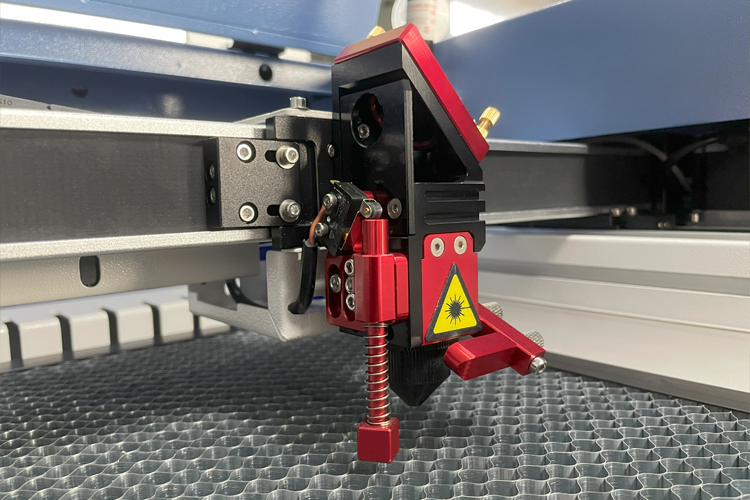
The laser head is moved by stepper or servo motors, following a digital design pattern.
CNC (Computer Numerical Control) ensures precision and repeatability in cutting or engraving operations.
d. Workbed / Cutting Table
The work area where the material is placed, available in various sizes to accommodate different projects.
Honeycomb or slat tables help reduce reflections and provide stable material support.
e. Cooling System
CO₂ laser tubes generate heat, so a water cooling system (such as a chiller) is used to maintain optimal operating temperature and prolong tube lifespan.
f. Exhaust & Filtration System
Fumes and debris generated during cutting are extracted using a ventilation system to ensure a safe working environment.
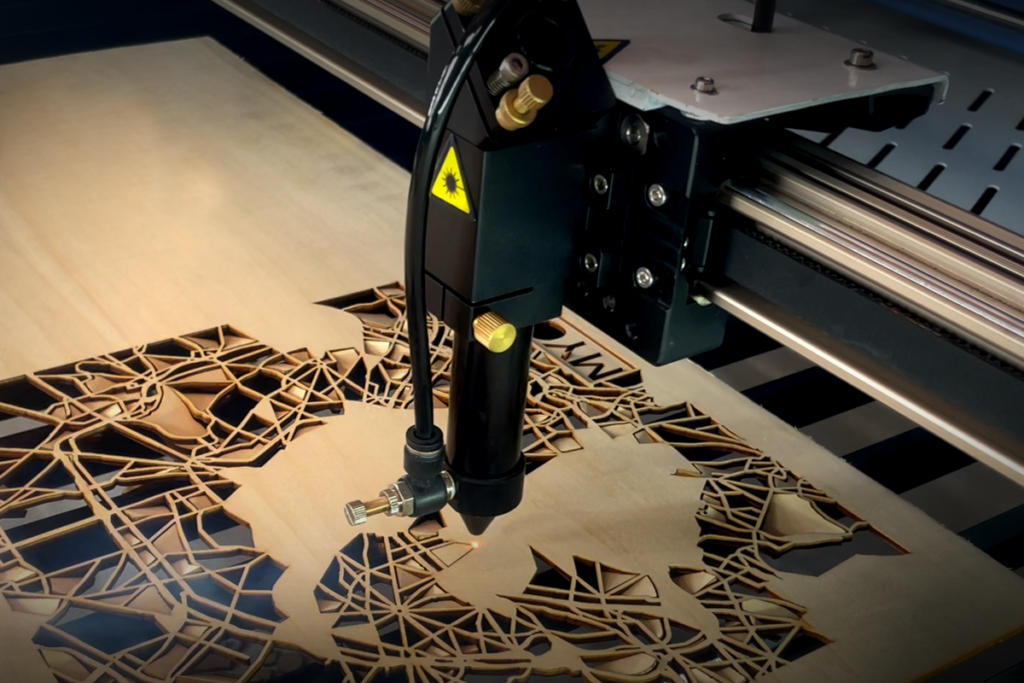
3. CO₂ Laser Cutting vs. Engraving: What’s the Difference?
| Process | How It Works | Common Applications |
|---|---|---|
| Laser Cutting | The laser fully penetrates the material, cutting through it completely. | Acrylic signage, wood decorations, fabric cutting. |
| Laser Engraving | The laser removes the surface layer of the material, leaving a permanent mark. | Personalized gifts, branding, serial numbers, artwork. |
| Laser Marking | The laser slightly alters the material’s surface without deep engraving. | Industrial marking, barcodes, logos on metal and plastics. |
4. Advantages of CO₂ Laser Machines
High Precision & Accuracy
CO₂ lasers offer ±0.01mm accuracy, making them ideal for intricate cuts and detailed engraving.
Versatile Material Compatibility
Can cut and engrave a wide range of materials, including:
Acrylic (perfect for signage & displays)
Wood (MDF, plywood, hardwood)
Leather & Fabric (custom fashion & accessories)
Glass & Ceramics (engraving, not cutting)
Fast and Efficient Processing
Compared to traditional cutting tools, CO₂ lasers work faster and require minimal post-processing.
Minimal Waste & Clean Cuts
Non-contact cutting means no tool wear, no material distortion, and smooth, polished edges on materials like acrylic.
Low Maintenance & Long Lifespan
MYounglaser CO₂ laser machines are built for durability, with sealed laser tubes lasting up to 10,000 hours with proper maintenance.
5. Choosing the Right CO₂ Laser Machine for Your Needs
When selecting a CO₂ laser machine, consider the following:
Laser Power
50W–100W: Best for engraving and cutting thin materials.
100W–150W: Suitable for medium-duty cutting (up to 10mm acrylic).
200W+: For heavy-duty cutting (thick materials, industrial use).
Work Area Size
Small (300x200mm): Hobbyist projects, small crafts.
Medium (600x400mm): Signs, displays, personalized gifts.
Large (1300x900mm or more): Industrial production, large acrylic cutting.
Brand & Supplier
MYounglaser CO₂ laser machines are known for their precision, affordability, and reliable customer support.
Partnering with a trusted CO₂ laser machine supplier ensures access to spare parts, software support, and training.
6. The Future of CO₂ Laser Cutting Technology
As CO₂ laser technology evolves, we can expect:
✅ Higher efficiency & faster speeds with improved laser tube technology.
✅ Enhanced automation using AI-powered design software.
✅ Greater material versatility, allowing for cutting and engraving on even more substrates.
✅ Eco-friendly solutions, reducing energy consumption and waste production.
CO₂ laser machines are powerful, versatile, and essential for businesses in signage, crafting, and industrial applications. Understanding how these machines work, their components, and their capabilities can help you make the right investment for your needs.
If you’re looking for a high-quality CO₂ laser cutting machine, MYounglaser is a trusted name among CO₂ laser machine suppliers, offering affordable, durable, and precision-engineered machines for acrylic and other materials.
Explore MYounglaser’s CO₂ laser machines today and bring your ideas to life!

Budget Series
Affordable & versatile—perfect for small businesses and creators looking for cost-effective laser solutions.

Dura Series
Industrial-grade CO2 laser cutters with unmatched precision and high-speed performance for professional manufacturing.

MIX Series
Hybrid CO2 & fiber laser technology—cut and engrave metal, acrylic, wood, and more with one machine.

OB Series
Large-format open-bed laser cutters designed for oversized materials—ideal for signmaking, furniture, and industrial applications.